Introduction
Getting dressed in the morning shouldn’t feel like a workout. But for a lot of people, that’s exactly what it becomes — twisting, reaching, bending over a chair, or asking someone else for help just to get a sock over the heel. Easy Pull on Socks were made to fix exactly that problem.
They’re built with a small loop or pulley near the top that lets you hook a finger or a simple tool through it and lift the sock into place without ever having to hunch forward or fight with the fabric. It sounds like a tiny detail, but for seniors, kids, or anyone dealing with arthritis, limited grip strength, or recovery after surgery, it changes the whole morning routine.
Why Ordinary Socks Are Harder Than They Should Be
Most socks weren’t designed with real bodies in mind — they were designed for a flat display shelf. That’s fine if your hands and back cooperate every day, but plenty of people don’t have that luxury. Bending down repeatedly can strain the lower back, and gripping tight elastic fabric is tough on stiff or weak fingers.
Anyone recovering from a hip replacement, dealing with arthritis, or living with limited hand dexterity knows this frustration well. It’s not laziness — it’s biomechanics. The lower you have to bend and the harder you have to grip, the more likely you are to lose balance or give up and ask for help.
That daily struggle is often overlooked because socks seem like such a small, forgettable item of clothing. Yet occupational therapists frequently list them as one of the most difficult things for patients to manage independently. A sock that requires no bending and minimal grip suddenly becomes a meaningful piece of independence, not just a convenience.
How Pulley-Style Socks Actually Work
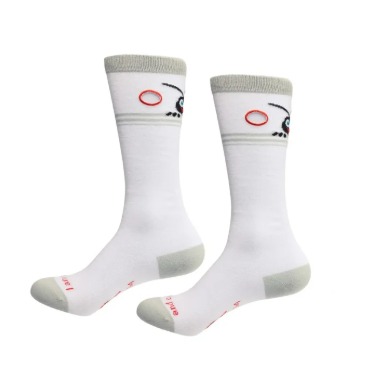
The idea is refreshingly simple. Instead of relying purely on stretch and grip to pull a sock up, a small fabric loop — sometimes called a pulley hole — is stitched near the ankle or cuff. You slide a finger, a hook, or even a pencil through the loop and gently pull upward. The sock glides on with far less resistance, and you never need to fold over or strain your wrist to force it up.
This design isn’t just a gimmick tacked onto a regular sock. It changes the mechanics of dressing entirely. Instead of pinching fabric between your fingers and yanking (which is hard if you have reduced grip strength), you’re using a lifting motion that requires much less fine motor control. That’s a big deal for people managing conditions like cerebral palsy, stroke recovery, or general age-related stiffness in the hands.
Who Actually Benefits From This Design
It’s easy to assume adaptive clothing is only for a narrow group of people, but that’s not really true. Seniors dealing with reduced flexibility are an obvious group — bending to reach your feet gets harder with age, and a fall risk from over-bending is a real concern. Kids who are learning to dress themselves also benefit, since a pulley loop gives them something to grab onto that doesn’t require adult-level finger strength.
Then there’s the group that often gets left out of the conversation: people recovering from surgery, whether that’s a knee replacement, back procedure, or something else that limits bending. Even athletes managing temporary injuries find the design useful for a few weeks. It’s genuinely a universal solution, not a niche product for a single condition.
Comfort Still Matters — It’s Not Just About the Pull
A sock could have the most clever pulley system in the world, and it still wouldn’t matter if it felt terrible on the foot. Comfort has to come first, or nobody wears it twice. Breathable, mostly cotton fabric keeps feet from overheating, especially for people who wear socks most of the day. A Y-shaped heel construction helps the sock actually sit where it should instead of bunching or twisting, and a seamless or near-seamless toe avoids the kind of pressure points that bother people with sensitive skin or neuropathy.
This is where a company like BeedleBug stands out — their socks combine that pulley design with soft cotton construction and reinforced stress points, so the practical feature doesn’t come at the cost of everyday comfort. It’s not a medical device that happens to look like a sock; it’s a sock that happens to solve a real medical-adjacent problem.
What to Look For Before You Buy
Not every “easy-on” sock claim holds up once you actually try it. A few things are worth checking before buying a pair. First, look at where the pulley loop is placed — too far to the side and it won’t lift evenly, causing the sock to twist as you pull. Second, check the fabric blend; overly synthetic materials can trap heat and moisture, which is uncomfortable for all-day wear and can be a real problem for people prone to skin irritation or swelling.
Sizing also matters more than people expect. A sock that’s too tight defeats the whole purpose, since tight elastic is exactly what makes pulling difficult in the first place. Look for a size chart and, if you’re buying for someone else — a parent, a grandparent, a child — measure rather than guess. Finally, check the toe seam. A rough or bulky seam might seem minor, but for someone with diabetic neuropathy or sensory sensitivity, it’s often the actual dealbreaker.
Everyday Independence Is the Real Win
Beyond the mechanics, there’s something worth sitting with here: independence in small daily tasks adds up to a lot of dignity. Needing help to put on socks every single morning, even from someone who loves you, can feel discouraging over time. Being able to do it alone — without pain, without a struggle, without asking — is a small thing that carries real emotional weight for people managing chronic conditions or aging bodies.
That’s really the whole point behind pull-on sock design. It’s not about marketing a “smart” product. It’s about removing one more obstacle from a day that might already have plenty of them.
FAQs
Do pull-on socks work for people without disabilities?
Yes. Anyone dealing with back pain, pregnancy-related bending limitations, or simple everyday stiffness can benefit, not just people with diagnosed conditions.
Are these socks only made for adults?
No, kids’ versions exist too, often sized for children who are learning to dress independently or who have conditions affecting fine motor control.
Will a pulley loop wear out or tear over time?
Well-constructed versions reinforce that loop area specifically, since it takes repeated pulling stress. Cheaper, poorly stitched versions are more likely to fray.
Can these socks be worn daily like regular socks?
Yes — the design is meant for everyday wear, not just occasional use, and most are made from breathable cotton blends suited for all-day comfort.
Do occupational therapists actually recommend this style?
Many do, particularly for clients recovering from spinal cord injuries, stroke, or hand-function limitations, since it reduces the fine motor demand of dressing.
Conclusion
Socks rarely get much thought until they become a daily obstacle. For people managing arthritis, limited mobility, recovery, or simply the natural stiffness that comes with age, a well-designed pull-on sock isn’t a luxury item — it’s a practical fix for a problem that affects real independence.
No bending, no fighting with tight fabric, no needing someone else’s hands just to get dressed. Sometimes the smallest design change is the one that makes the biggest difference in someone’s morning.