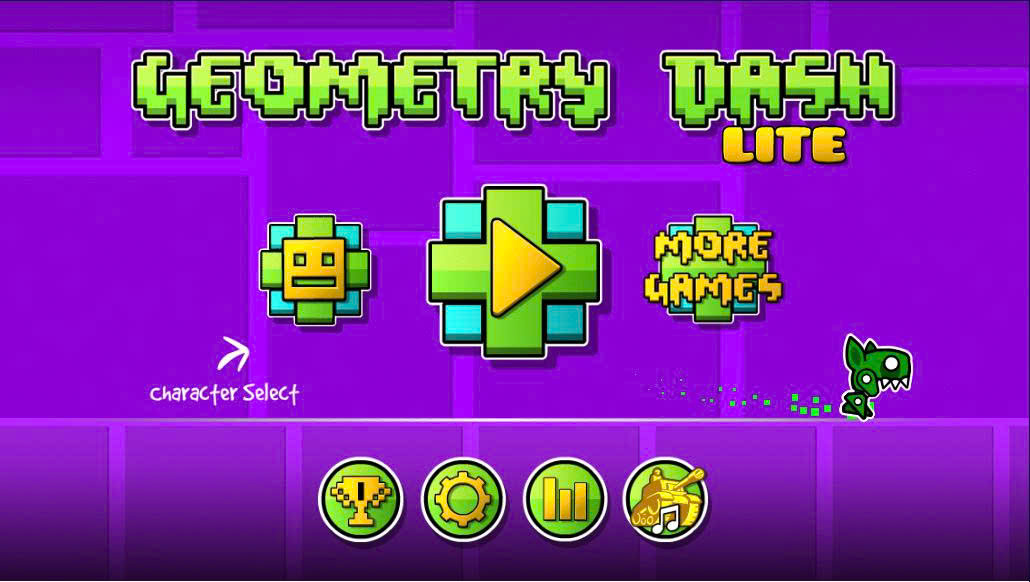
Introduction Geometry Dash
Some games ask you to explore a huge world, collect a long list of equipment, or learn a complicated set of controls. Geometry Dash takes a different route: you guide a small geometric character through a scrolling course of spikes, gaps, platforms, and sudden surprises. The idea is simple enough to understand in seconds, but the timing can make even a short level feel like a lively little puzzle.
That contrast is a big part of the fun. Every jump is easy to describe—press at the right moment—but getting the timing right asks you to pay attention, stay calm, and learn from each attempt. The game turns movement into a kind of rhythm challenge. You are not only watching where the character is; you are anticipating what comes next and deciding when to act.
Whether you are trying a level for the first time or returning to a tricky section, the best way to enjoy a geometry jump is to treat it as an experience rather than a test. A failed run is not a verdict. It is a small piece of information about the course, and the next attempt gives you a chance to use it.
Gameplay: one button, many decisions
At first, the controls seem wonderfully uncomplicated. In the classic cube sections, a tap makes your character jump. Hold or tap according to the game’s control behavior, and the cube moves through a course that keeps scrolling forward. Touching a hazard or missing a landing usually sends you back to the start of the level, so each run becomes a continuous effort to read the path ahead.
The challenge comes from how much variety can fit into that simple action. A low spike may call for a quick tap, while a broad gap needs a carefully timed leap. Platforms can change the height or direction of a jump, and a sequence of hazards may demand several inputs in quick succession. As levels progress, portals can transform the character or alter how movement works. A familiar-looking stretch can suddenly ask you to fly, flip gravity, or navigate a narrower route.
Music helps tie these moments together. Many courses line up obstacles and movement with a strong beat, making the level feel less like a random obstacle course and more like a short performance. Listening can give you useful timing cues, but it is not a substitute for looking at the screen. A rhythm may guide your sense of pace; the shapes and spacing still tell you where the safe path lies.
The game’s quick restarts are important, too. There is little downtime after a mistake, so you can try again while the last attempt is still fresh in your mind. After a few runs, a confusing passage may become familiar: first you notice the hazard, then you understand the timing, and eventually your hands respond before you have to think through every detail. That gradual shift from uncertainty to fluency is one of the most satisfying parts of play.
Tips: make each attempt count
Start with a level that leaves room to learn. If you are new, choose an easier course and focus on the basic rhythm of jumping and landing. A clear introduction to the controls is more useful than immediately throwing yourself at the hardest level you can find. Build confidence with a few manageable sections before taking on faster patterns.
Look ahead, not only at your character. It is tempting to stare at the cube, especially when a jump feels close. Try to keep your attention slightly in front of it. Spotting the next obstacle early gives your brain a moment to prepare, and that can make your input feel deliberate rather than panicked.
Use practice tools when they are available. Some versions and levels offer ways to place checkpoints or rehearse sections. These tools let you focus on one difficult sequence instead of replaying everything before it. Practice a section until you can identify its cues, then return to a full run and see how it feels without a safety net.
Notice patterns instead of memorizing every tap. Learning exact inputs can help, but it is often more reliable to understand why a jump works. Is the cue a beat in the music, the edge of a platform, or the distance between two hazards? Recognizing the pattern makes it easier to recover if your timing is slightly different on a later attempt.
Change one thing at a time. If you keep failing at the same point, do not rush into a dozen adjustments. Try tapping a fraction earlier, watching a particular landmark, or listening for a musical cue. Small experiments make it easier to tell what helped. If frustration builds, pause for a minute. A short break can reset your attention better than another hurried attempt.
Let the visuals and sound work together. The beat can help you settle into a steady pace, while the obstacle layout gives you the practical information needed to react. If the music distracts you, lower the volume or try a run with more attention on the visual cues. There is no single correct way to tune into a level.
Conclusion
A geometry jump is a small action with a surprisingly rich feel. It combines timing, observation, rhythm, and trial and error in a package that is easy to pick up and rewarding to improve at. In Geometry Dash, a single tap can carry you over a hazard, but the real skill lies in reading the course, learning its patterns, and staying composed when a run does not go your way.
Approach each level with curiosity. Enjoy the music, pay attention to the shapes, and let mistakes teach you where the timing changes. You do not need a perfect run to have a good session; sometimes the best moment is simply realizing that a section that once seemed impossible now feels natural. When you find that rhythm, every jump becomes part of the fun.