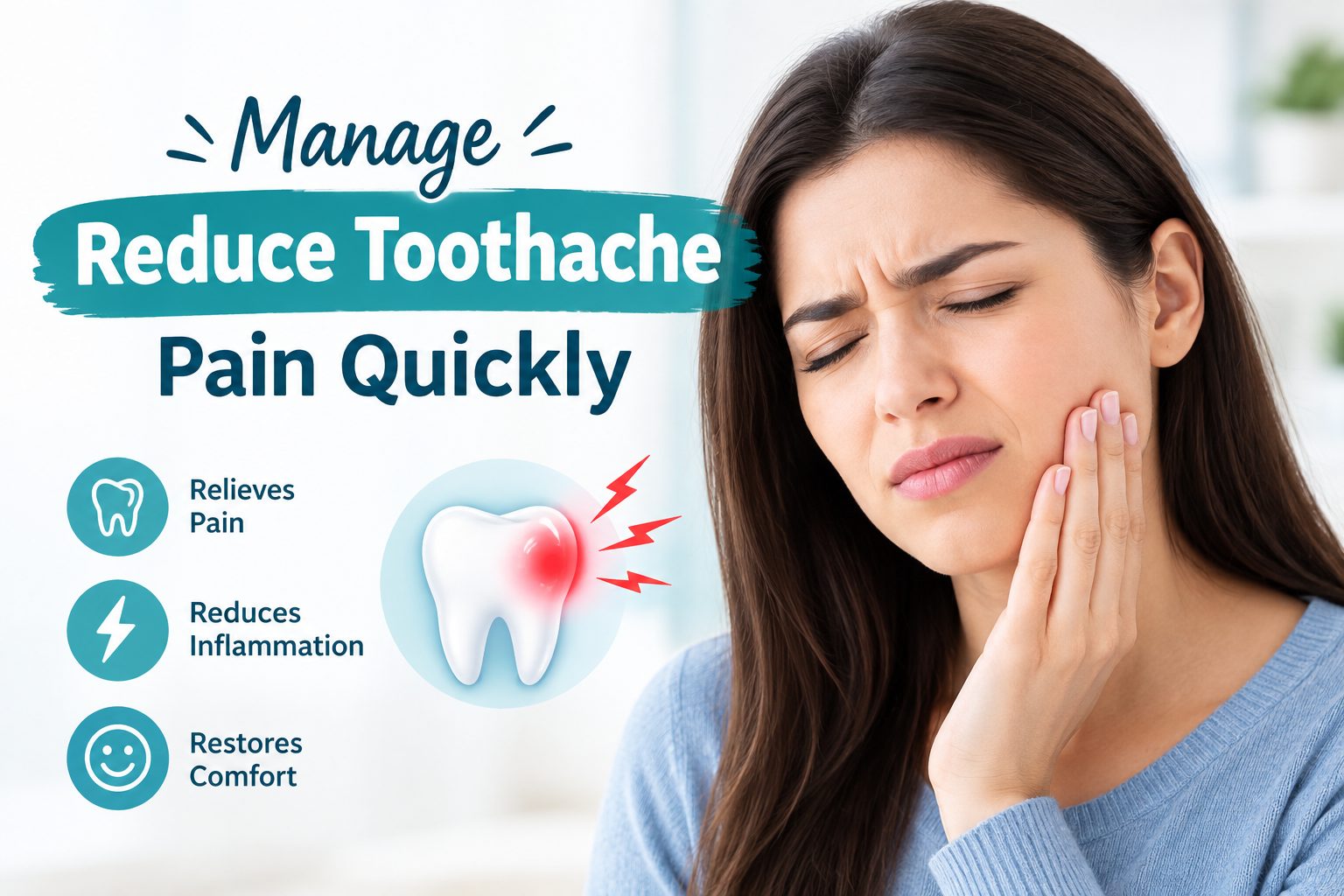
A toothache or gum pain may make normal tasks seem challenging. Eating, drinking, conversing, and even resting may be made uncomfortable by your aching mouth. There could be many causes of tooth pain, ranging from cavities, gum irritation, tooth sensitivity, injury, or even having food trapped between the teeth. Knowing what may be causing your pain is important in deciding how best to deal with it and safeguarding your oral health.
Ibuprofen 400 mg and Brufen 600 mg may be used to relieve tooth and inflammation pain on a temporary basis. Such medications will alleviate your pain while you arrange the correct dental treatment. Always follow the advice of your medical practitioner or that of the manufacturer’s labeling and never exceed the prescribed dosage.
What Causes Toothache and Gum Pain?
Toothache does not always have the same cause. Some people notice sudden, sharp pain, while others experience a dull or constant ache. Gum pain may also cause swelling, tenderness, or discomfort when chewing.
Common causes include:
- Tooth decay or cavities
- Gum irritation or inflammation
- Food trapped between teeth
- Tooth sensitivity
- Cracked or damaged teeth
- Dental injuries
- Poor oral hygiene
- Pressure around a tooth
- Gum problems that need professional attention
Identifying the cause matters because pain relief alone may not solve the underlying dental problem.
Simple Ways to Manage Toothache at Home
You can take several simple steps to make mild tooth discomfort easier to manage. These steps can support your oral health while you decide whether you need professional dental care.
Keep Your Mouth Clean
Continue brushing your teeth gently twice a day. Avoid brushing too aggressively around a painful area because strong pressure can make irritated gums feel worse.
Floss carefully to remove food particles from between your teeth. Sometimes, trapped food can cause pressure and discomfort.
Rinse Your Mouth
A gentle mouth rinse can help keep the area clean. Rinsing can remove loose food particles and support good oral hygiene.
Avoid very hot or very cold liquids if they increase your pain. Choose a comfortable temperature instead.
Choose Soft Foods
When your tooth or gums hurt, hard and crunchy foods may increase discomfort. Choose softer foods that require less chewing.
Try to avoid putting unnecessary pressure on the painful side of your mouth. This can make eating more comfortable while the area settles.
Avoid Extreme Temperatures
Very hot and very cold foods or drinks can trigger tooth pain, especially when sensitivity contributes to the problem. If you notice this reaction, choose foods and drinks at moderate temperatures.
Managing Pain and Inflammation
Pain is sometimes accompanied by swelling in the area where the pain occurs. Ibuprofen 400 mg and Brufen 600 mg can be used for pain and inflammation.
Before choosing any remedy, think about your own condition. Do not take the medication in higher doses than prescribed. Should there be any doubt about the suitability of any of these options for you, consult a specialist.
Pain relievers will ease the discomfort, but they will neither fix a cracked tooth nor cure all the causes of gum pain.
When Should You See a Dentist?
Some toothaches disappear after a short time, but persistent or severe pain should not be ignored. A dentist can examine your teeth and gums and identify the underlying problem.
Consider arranging dental care if:
- Tooth pain lasts for more than a short period
- The pain keeps returning
- Your gums become very swollen or tender
- You notice bleeding gums that continue
- A tooth becomes damaged or cracked
- Chewing becomes difficult
- You develop significant swelling around the mouth
- Pain interferes with sleep or daily activities
Seek urgent professional care if you develop severe swelling, difficulty breathing or swallowing, or other serious symptoms.
Protect Your Teeth and Gums Every Day
Good oral care can lower the chance of many common dental problems. Small habits can make a big difference over time.
Follow these simple habits:
- Brush your teeth twice each day.
- Clean between your teeth regularly.
- Limit frequent sugary snacks and drinks.
- Drink enough water throughout the day.
- Replace your toothbrush when it becomes worn.
- Avoid using your teeth to open packages or bite hard objects.
- Schedule regular dental checkups.
- Pay attention to changes in your teeth or gums.
These habits can help maintain healthy teeth and gums and may help you notice problems before they become more uncomfortable.
Toothache and Gum Pain in the USA
Individuals in America often experience the pain associated with sensitive teeth, tooth decay, and even gum irritation, among others. Sometimes individuals may find themselves postponing their dental checkup due to pain, due to a busy schedule. Continuous tooth pain may indicate something that requires medical assistance.
With simple oral hygiene practices and consultations from your dentist if need be, you can comfortably manage your pain. In case you decide to take some over-the-counter or prescription medicine for your pain, ensure you read the instructions.
How BuyRxSafe Can Help
BuyRxSafe is an online service, which provides customers with information about healthcare products and different options. As you evaluate the product to treat your pain, be sure to read the product information carefully and follow the directions.
However, note that treatment of toothache is not the only aspect of dental care. In case of continued or severe pain, consultation with a dentist is highly recommended. Treatment of the cause of the problem can help avoid its progression.
Final Thoughts
Pain in the teeth and gum might impact your ability to eat and sleep, but there are some measures that you can take to ease any discomfort that you have.
The use of Ibuprofen 400mg and Brufen 600 mg can assist in relieving pain and inflammation, provided the right measures are taken. Pain relief will not take the place of dental treatment if the cause of the discomfort remains untreated.
In case the toothache persists and gets worse, or there is any swelling, you should seek assistance from a dentist without delay. Taking care of your teeth and gums on a daily basis is one of the most effective ways to look after your mouth.