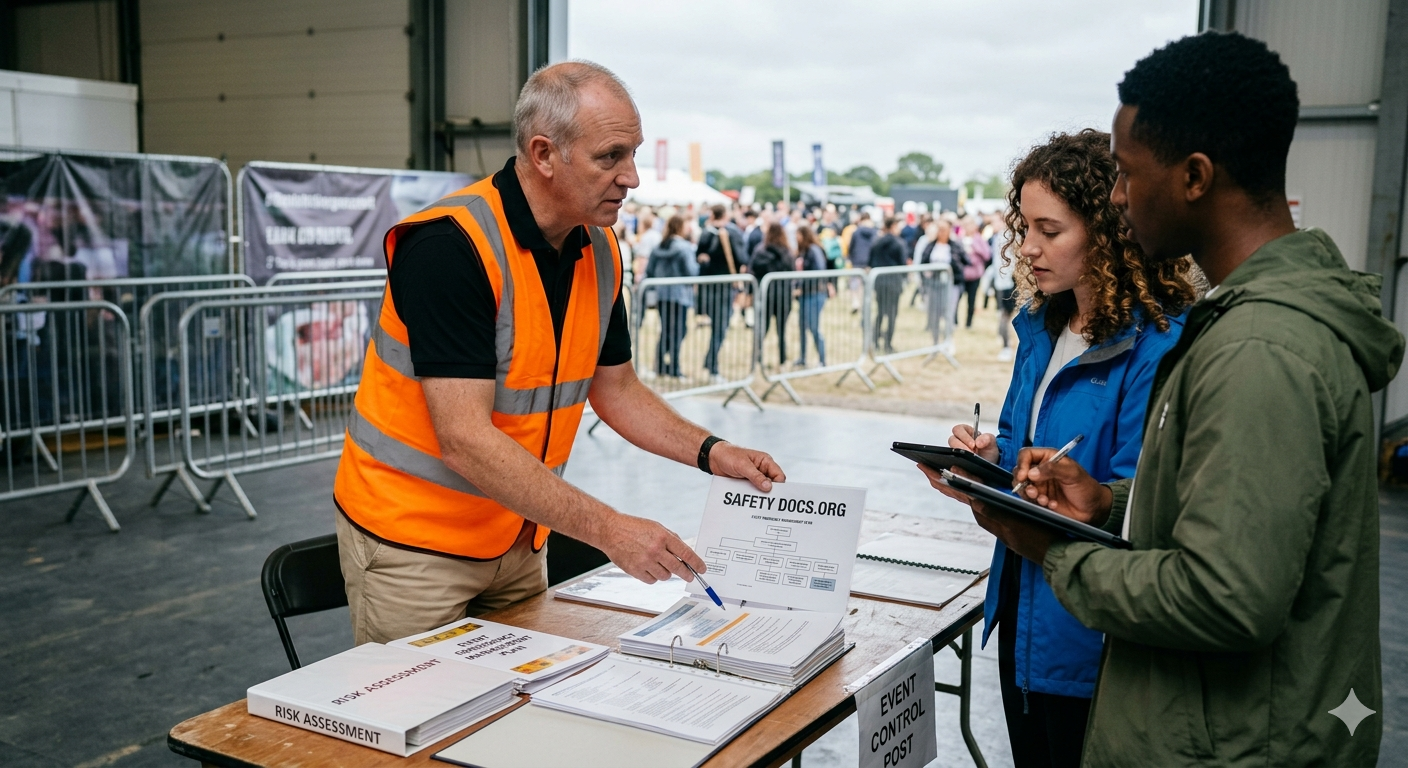
The house lights dim, the crowd roars, and thousands of eager fans lift their phones in unison. For an event planner, this is the ultimate validation of months of meticulous logistics, venue negotiation, and marketing. But behind the scenes, a completely different reality exists. In a matter of seconds, an unpredicted severe weather front, a structural failure, or a sudden medical crisis can turn a flawless production into a high-stakes rescue operation.
True event mastery is not defined by how smoothly things run when everything goes right. It is defined by how precisely your team reacts when everything goes completely wrong. Ensuring crowd safety requires moving past reactive crisis management and embracing an uncompromising, proactive framework for operational security.
The Pillars of Event Risk Assessment
Every successful safety strategy begins long before the first piece of rigging is lifted into place. Risk assessment is not a bureaucratic checkbox; it is a dynamic, evolving analysis of human behavior, structural limitations, and environmental variables.
Organizers must systematically evaluate potential vulnerabilities by analyzing the unique footprint of their specific gathering. A corporate tech conference inside a convention center demands a radically different safety profile than a three-day outdoor music festival.
Dynamic Crowd Dynamics and Capacity Control
Crowds behave less like a collection of individuals and more like a fluid, predictable physical force. When structural bottlenecks or poor spatial planning restrict this movement, localized density can quickly spike to dangerous levels.
- Ingress and Egress Modeling: Mapping clear, unblocked pathways that allow the maximum capacity of attendees to enter and exit the venue efficiently.
- Surge Mitigation Barriers: Utilizing engineered physical barriers to distribute crowd pressure evenly across high-traffic zones, such as main stages or ticketing turnstiles.
- Real-Time Density Monitoring: Training perimeter personnel to spot early warning signs of crowd distress, such as localized column stalling or high-density compression.
Environmental and Vendor Hazard Analysis
Temporary infrastructure such as massive LED walls, scaffolding, and outdoor staging introduces severe physical vulnerabilities. High winds, unexpected lightning strikes, or a sudden downpour can instantly transform these installations into major hazards.
Furthermore, pop-up catering kitchens utilizing open flames and pressurized propane tanks require strict operational boundaries. A comprehensive site audit ensures that clear safety perimeters are established around all high-risk vendor zones and temporary utility grids from day one.
Constructing an Actionable Protocol Matrix
When a crisis occurs, panic is the default human response. Clear, rational decision-making evaporates, and reaction times slow down dramatically. To prevent localized chaos from cascading into systemic failure, your team must rely on an instantly deployable protocol matrix.
This is where a specialized event emergency management plan becomes your most vital asset. Rather than a dense, text-heavy manual that sits forgotten on a shelf, this document must serve as a highly functional, battle-tested operational guide. It explicitly outlines chain-of-command hierarchies, communication flows, and tactical evacuation routes that can be executed with zero hesitation.
+———————————————————————————+
| INCIDENT COMMAND CHAINS OF ACTION |
+———————————————————————————+
| 1. Incident Spotter –> 2. Safety Director –> 3. Venue Command |
| (Identifies anomaly) (Verifies severity) (Triggers site response) |
+———————————————————————————+
Establishing a Unified Chain of Command
A major pitfall in live event security is communication cross-talk. When local law enforcement, private security contractors, venue staff, and medical teams are all operating on completely different channels without a centralized coordinator, critical messages get lost.
An effective plan implements a strict Incident Command System (ICS). This structure designates a single, definitive Safety Director who sits at the center of all communications, filtering data from the floor and authorizing immediate tactical actions. When everyone knows precisely who to report to, response lag is completely neutralized.
Rapid Evacuation and Shelter-in-Place Mapping
Getting thousands of people out of a venue requires clear coordination, not just open doors. Evacuation routes must be completely isolated from vendor supply lines and emergency vehicle access roads.
- Zoned Paging Systems: Utilizing multi-zone public address systems to evacuate high-risk areas first, preventing secondary crowd crushes at main exits.
- Illuminated Pathway Markings: Ensuring backup generators instantly power dedicated emergency exit lighting if a primary grid failure occurs.
- Designated Muster Points: Establishing external assembly areas located far enough from the venue to allow municipal emergency services to operate without crowd interference.
Digital Compliance and Material Readiness
The operational reality of modern compliance means that missing documentation is just as dangerous as missing medical equipment. Local municipal authorities, fire marshals, and insurance underwriters demand verifiable, real-time proof of your safety protocols before granting operational permits.
Organizers can utilize specialized platforms like Safety docs to access expertly formatted, legally compliant safety frameworks. Digitizing this documentation ensures that site safety checklists, risk assessment matrixes, and vendor liability waivers are instantly accessible to municipal inspectors on-site, removing administrative roadblocks and keeping your production fully compliant.
+———————————————————————–+
| CRITICAL DOCUMENT PERMIT CHECKLIST |
+———————————————————————–+
| [ ] Site Risk Assessment Matrix |
| [ ] Structural Engineering Sign-offs (Stages/Rigging) |
| [ ] Specialized Fire Safety and Pyrotechnic Permits |
| [ ] Medical Response & Private Ambulance Agreements |
+———————————————————————–+
Pre-Event Staff Briefings and Simulations
The absolute finest safety document is entirely useless if the frontline staff has never read it. A common operational failure is relying on a 10-minute briefing on the morning of the event to train hundreds of temporary, short-term event stewards.
Securing a site requires mandatory, scenario-based simulation training. Run through active exercises with your core team: simulate a main stage power outage, a sudden medical emergency in the center of a dense crowd, or an immediate weather evacuation order. When your crew has physically walked through these scenarios, their responses become muscle memory.
Managing the Immediate Aftermath of a Crisis
The responsibilities of an operations team do not end once the physical threat is contained. How your management team handles the immediate aftermath in the event of an emergency dictates both the legal liability and the long-term reputation of your organization.
A chaotic, uncoordinated post-incident response can amplify public panic, complicate local medical triage efforts, and expose your business to severe litigation. Strategic oversight must extend straight through to media coordination and post-incident investigation procedures.
Secure Media and Public Relations Protocols
In an era dominated by instantaneous smartphone live-streaming, unverified and inaccurate information will spread across social platforms within seconds of an incident. Speculation regarding injuries or systemic failures can easily compromise active emergency response efforts.
Your operational protocol must include a strict media lockdown for general event staff. All external communication must flow exclusively through a pre-designated Public Information Officer (PIO). This individual coordinates directly with municipal emergency services to release factual, verified updates, keeping the public informed while protecting the integrity of the active site response.
Conclusion
The unpredictability of live events is exactly what makes them so exhilarating, but it is also what makes them inherently hazardous. True operational excellence means refusing to rely on luck, assumptions, or outdated handshake agreements. By implementing a highly structured emergency framework, establishing an unshakeable chain of command, and maintaining digital compliance, you protect your attendees, insulate your business from liability, and ensure your production legacy remains untarnished.
Key Takeaway
Crowd safety is never an accident; it is always the direct result of deliberate, detailed structural planning. A rigorously detailed emergency management plan combined with verified operational compliance is the single most important investment an organizer can make to secure a venue and protect human lives.
Frequently Asked Questions
Q1: What is the ideal ratio of safety stewards to event attendees?
While standard municipal guidelines often recommend a general ratio of 1 steward per 100 attendees, this must be adjusted based on your specific risk profile, alcohol availability, and crowd demographics.
Q2: How often should an event emergency management plan be updated?
The core framework must be reviewed annually, but the site-specific annexes, vendor contacts, and route maps must be completely updated for every single individual production.
Q3: Who holds ultimate legal liability if an incident occurs at a rented venue?
Liability is typically shared via a complex matrix. The venue is responsible for structural integrity, while the event organizer is liable for operational risks, crowd control failures, and vendor compliance.
Q4: Can a local fire marshal shut down an active event without warning?
Yes. Fire marshals hold absolute jurisdiction over occupancy limits, blocked egress pathways, and unpermitted pyrotechnics, and can halt an event instantly if a life-safety hazard is identified.
Q5: What is the first communication step when a critical safety breach is detected?
The onsite spotter must immediately alert the Central Control Room via a dedicated, uncompromised emergency radio channel, stating the precise location, nature of the hazard, and estimated crowd density.